
Vacuum packaging relies on a reliable sealing system to maintain product protection, extend shelf life, and prevent contamination during storage and transportation. The performance of the heat seal directly affects the integrity of flexible barrier packaging, making Zkoušky tepelného svařování an essential evaluation method for packaging manufacturers and quality control laboratories.
For vacuum packaging applications, the seal area is often the most vulnerable part of the package. Even when the film structure provides excellent barrier properties, insufficient sealing conditions may cause leakage, seal failure, or reduced package durability. By measuring pečetní pevnost under controlled laboratory conditions, engineers can evaluate whether packaging materials and sealing parameters meet application requirements.
Normy, jako jsou například ASTM F2029 provide guidance for preparing laboratory heat seals and evaluating the heat sealability of flexible barrier materials. This standard helps manufacturers understand how sealing temperature, pressure, and dwell time influence the final sealing performance.
Heat Seal Testing and Seal Strength Evaluation Based on ASTM F2029
Zkoušky tepelného svařování is designed to determine the ability of flexible packaging materials to form strong and consistent seals under controlled conditions. According to ASTM F2029, laboratory heat sealing practices focus on preparing test seals that can later be evaluated for their sealing performance.
The standard applies to flexible barrier materials used in packaging structures, including homogeneous films, coated films, laminated films, and multilayer packaging materials. These materials are commonly used for vacuum packaging because they combine mechanical strength, barrier properties, and sealing capability.
The main purpose of the test is to establish suitable sealing conditions by studying the relationship between sealing parameters and pečetní pevnost. Important factors include:
- Sealing temperature: Determines whether the sealing layer reaches an appropriate melting or bonding condition.
- Dwell time: Controls how long the materials remain under heat and pressure.
- Sealing pressure: Ensures sufficient contact between sealing layers.
- Film structure: Different materials and multilayer constructions influence sealing behavior.
ASTM F2029 emphasizes that laboratory results provide a reference for selecting production sealing conditions. Since laboratory equipment and industrial packaging machines have differences in sealing speed, sealing area, and operating environment, manufacturers should use laboratory data as a starting point for production optimization.
Importance of Heat Seal Testing for Vacuum Packaging Applications
In vacuum packaging, maintaining package integrity is critical because air removal creates pressure differences between the inside and outside of the package. A weak seal may result in air leakage, moisture penetration, or product spoilage.
Heat Seal Testing helps packaging engineers identify the optimal sealing window before mass production. Instead of adjusting production parameters through repeated trial and error, laboratory testing allows manufacturers to systematically evaluate different combinations of temperature, pressure, and time.
Typical applications include:
- Food vacuum pouches and flexible barrier bags
- Medical and pharmaceutical packaging
- Sterile barrier packaging
- Retort packaging materials
- Composite films and laminated structures
For quality control teams, seal testing provides measurable data rather than visual inspection alone. The obtained pečetní pevnost values help compare different packaging materials, verify supplier consistency, and monitor production stability.
Laboratory Heat Seal Testing Procedure
A typical Heat Seal Testing process includes several controlled steps.
Příprava vzorků
The flexible packaging materials are first prepared into suitable test strips. Samples may consist of identical films or different materials depending on the packaging structure being evaluated.
Before testing, samples should be conditioned according to the requirements of the testing program. Environmental conditions can influence polymer behavior and sealing performance.
Equipment Calibration and Setup
Before testing begins, the heat sealing equipment should be checked for proper calibration and alignment. The sealing jaws must maintain parallel contact to ensure uniform heat and pressure distribution.
The operator selects appropriate testing parameters:
- Teplota utěsnění
- Doba zdržení
- Tlak utěsnění
- Konfigurace čelisti
For many flexible barrier materials, both sealing jaws are adjusted to the same temperature. However, specific packaging structures may require customized settings.
Creating Heat Seals
During the sealing process, the material is placed between heated jaws. The jaws apply controlled temperature, pressure, and contact time to create a seal.
To develop a heat seal curve, manufacturers may gradually change sealing temperature while keeping other parameters constant. This approach helps identify:
- Seal initiation temperature
- Optimal sealing temperature range
- Maximum achievable seal performance
- Potential material damage caused by excessive heat
Measuring Seal Performance
After creating the seals, samples can be evaluated using a suitable seal strength testing method. The test results provide information about the strength and consistency of the heat seal.
A higher and more stable seal strength generally indicates better sealing reliability. However, excessive sealing force may damage packaging materials, so manufacturers must balance strength with flexibility and package functionality.
Factors Affecting Heat Seal Performance
Several factors influence the results obtained during Heat Seal Testing:
Material composition:
Different polymers, coatings, and adhesive layers have different sealing characteristics.
Temperature control:
Incorrect temperature settings may result in incomplete bonding or film degradation.
Pressure consistency:
Uneven pressure can create weak areas within the seal.
Dwell time:
Insufficient time may prevent proper bonding, while excessive time may damage the film structure.
Understanding these factors allows manufacturers to optimize vacuum packaging performance and reduce packaging failures.
Recommended Equipment for Vacuum Packaging Heat Seal Testing
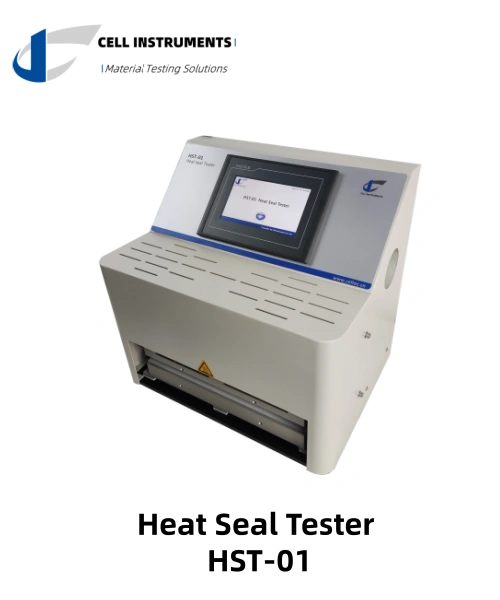
For laboratory evaluation of flexible packaging materials, the Průzkumník tepelného svařování Cell Instruments HST-01 provides a practical solution for preparing and evaluating heat seals. It supports controlled adjustment of sealing temperature, dwell time, and sealing pressure, helping users study the influence of different sealing conditions on packaging performance.
The equipment is suitable for packaging development, material comparison, and quality control applications involving films, laminates, and flexible barrier materials. By combining controlled sealing preparation with reliable testing procedures, laboratories can obtain repeatable data to improve vacuum packaging reliability.
Závěr
Heat Seal Testing plays an important role in ensuring the reliability of vacuum packaging systems. Through controlled evaluation of sealing temperature, pressure, and dwell time, manufacturers can better understand material behavior and establish suitable sealing conditions.
Following the principles described in ASTM F2029 allows packaging professionals to evaluate flexible barrier materials scientifically and improve sealing consistency. Combined with accurate laboratory testing equipment, heat seal analysis helps reduce package failures, improve product protection, and support continuous packaging quality improvement.