
Alat Uji Penyegelan Panas
Kekuatan Segel Panas ASTM F2029
Alat penguji penyegelan panas adalah alat laboratorium yang digunakan untuk mengevaluasi sifat penyegelan bahan kemasan dengan mengukur kekuatan, keutuhan, dan kualitas sambungan yang disegel dengan panas. Alat ini umumnya digunakan di berbagai industri, seperti kemasan makanan, farmasi, alat kesehatan, dan kemasan fleksibel, untuk memastikan bahwa produk yang disegel dengan panas tetap mempertahankan keutuhannya selama penyimpanan dan pengangkutan.
Penyegelan panas merupakan proses yang sangat penting dalam pengemasan, yang menjamin keamanan dan keutuhan produk. Alat penguji penyegelan panas mengevaluasi kekuatan dan kualitas segel pada bahan kemasan fleksibel. Dengan mengikuti prosedur standar seperti ASTM F2029, produsen dapat mengoptimalkan kondisi penyegelan dan memastikan keandalan produk.
Apa itu Penyegelan Panas?
Penyegelan panas adalah proses penyambungan bahan termoplastik dengan memanfaatkan panas, tekanan, dan waktu penahanan yang terkendali. Metode ini banyak digunakan dalam industri pengemasan untuk menghasilkan segel yang kedap udara dan tahan manipulasi, terutama dalam aplikasi di bidang pangan, farmasi, dan medis.
Pengujian Kekuatan Segel Panas
Kekuatan segel panas mengacu pada gaya yang diperlukan untuk memisahkan dua lapisan yang telah disegel. Faktor-faktor yang memengaruhi kekuatan segel antara lain komposisi bahan, ketebalan, suhu, tekanan, dan waktu penahanan. Penilaian terhadap kekuatan segel panas memastikan keutuhan kemasan serta mencegah kebocoran atau kontaminasi.
Pengujian Integritas Segel Panas
Pengujian integritas segel panas bertujuan untuk memastikan bahwa segel tetap utuh dalam kondisi yang menimbulkan tekanan, seperti tekanan, fluktuasi suhu, dan gaya mekanis. Metode yang digunakan meliputi pemeriksaan visual, uji munculnya gelembung, dan penilaian kekuatan lepas untuk memastikan kesesuaian dengan standar industri.
Metode Uji Kekuatan Segel Panas
Yang metode pengujian kekuatan segel panas, sebagaimana dijelaskan dalam ASTM F2029, melibatkan pembuatan segel panas di laboratorium dalam kondisi terkendali. Parameter-parameter utamanya meliputi:
- Suhu: Tentukan berdasarkan sifat bahan dan tujuan pengujian.
- Waktu Tinggal: Lama waktu pemanasan, yang memengaruhi kekuatan ikatan.
- Tekanan Penyegelan: Biasanya berkisar antara 0,15 hingga 0,7 MPa, sehingga memastikan daya rekat yang optimal.
- Konfigurasi Rahang: Rongga rahang harus sejajar, dengan lapisan pelindung yang sesuai untuk mencegah bahan menempel.
Spesimen yang telah disegel tersebut menjalani uji kekuatan dengan menggunakan uji pengelupasan atau uji tarik sesuai dengan ASTM F88 untuk menentukan beban hingga kegagalan dan mode kegagalan.
ASTM F2029 - Praktik Standar untuk Pengujian Kemampuan Penyegelan Panas
ASTM F2029 menyediakan pedoman untuk pengujian penyegelan panas di laboratorium terhadap bahan penghalang fleksibel. Poin-poin utamanya meliputi:
- Evaluasi Bahan: Mengukur sejauh mana sifat-sifat bahan yang berbeda memengaruhi kemampuan penyegelan panas.
- Analisis Kurva Penyegelan Panas: Menentukan kondisi penyegelan yang optimal dengan mengubah suhu dalam selang 5–10°C.
- Persiapan Spesimen: Memastikan orientasi sampel dan kondisi penyegelan yang konsisten.
- Pengukuran Kekuatan Segel: Menggunakan uji pengelupasan untuk menilai ketahanan ikatan.
Alat Uji Penyegelan Panas - Teknologi Canggih untuk Penyegelan yang Presisi
Yang HST-01 Alat Uji Penyegelan Panas dirancang untuk memberikan kinerja penyegelan yang unggul dengan stabilitas dan presisi yang tinggi. Fitur-fiturnya antara lain:
- Pengoperasian yang dikendalikan oleh PLC untuk keandalan tingkat industri, dengan sebuah Layar sentuh HMI agar mudah digunakan.
- Komponen pemanas bagian atas dan bawah yang terbuat dari aluminium, sehingga memastikan kehilangan panas seminimal mungkin dan pengendalian suhu yang stabil.
- Pengatur suhu P.I.D. presisi tinggi agar pemanasan berlangsung akurat dan konsisten.
- Pemicuan segel yang tersinkronisasi dengan menggunakan sensor jarak yang akurat.
- Bilah penyegel yang dipandu tiga arah, memastikan tekanan yang merata untuk hasil yang konsisten.
- Tindakan keselamatan bagi pengguna, termasuk penutup depan anti-panas dan pengoperasian secara manual atau dengan sakelar kaki.
- Rongga segel yang dapat disesuaikan dengan berbagai ukuran, bentuk, dan pola.
- Port COM RS-232 opsional untuk transfer data dan integrasi perangkat lunak.
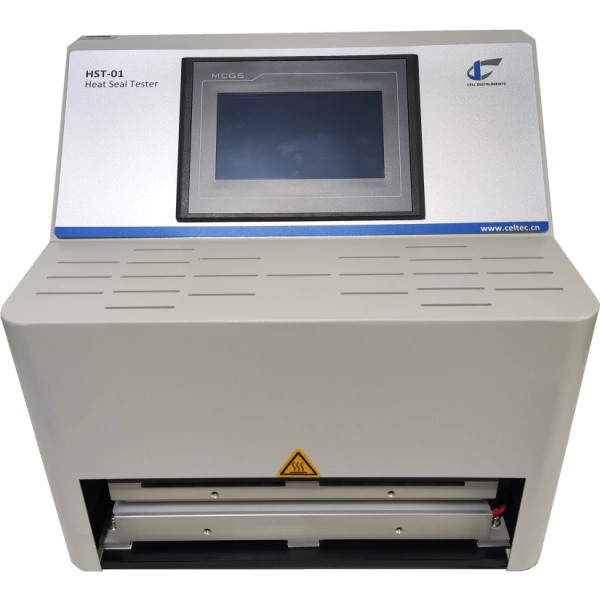
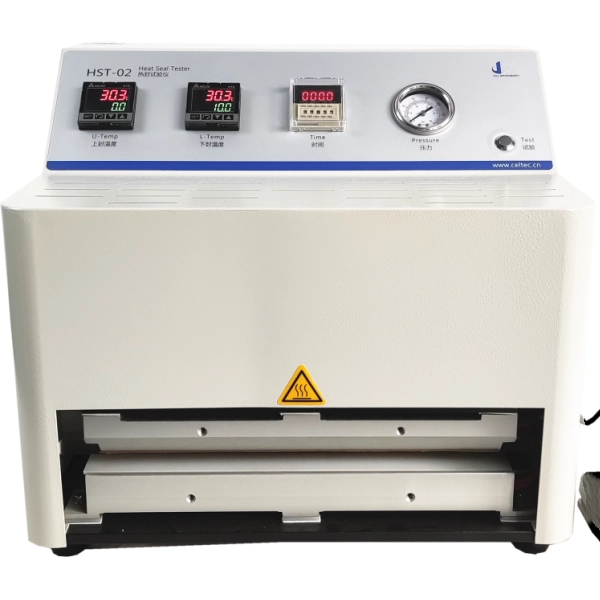
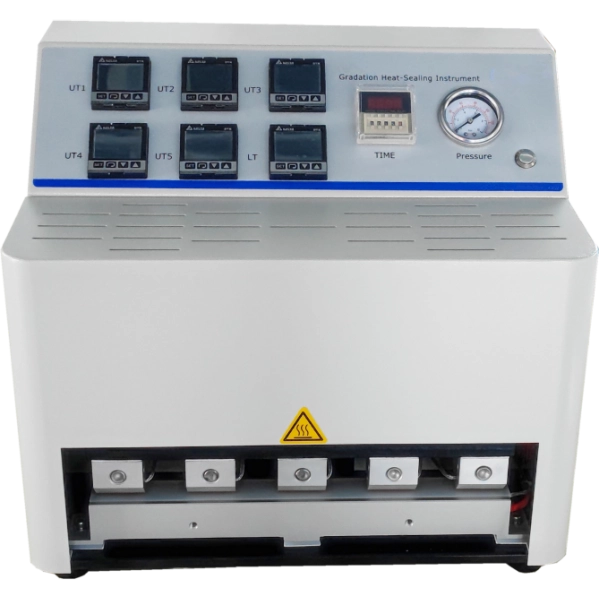
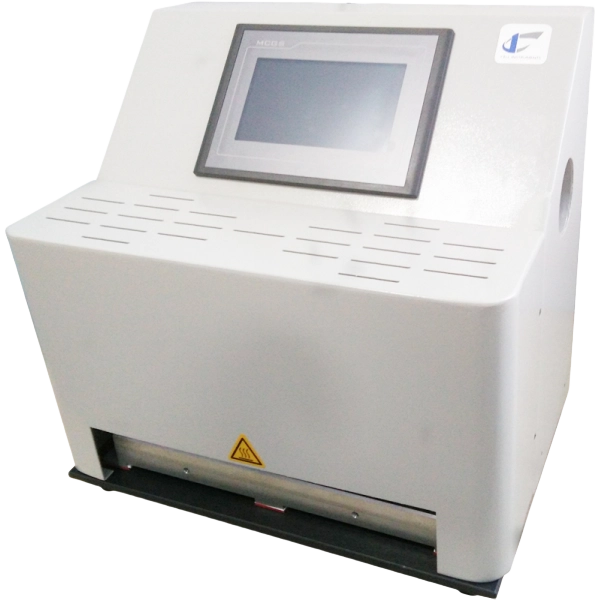
Parameter Utama
| Parameter | HST-01 Alat Uji Penyegelan Panas | HST-02 Alat Uji Penyegelan Panas | GHS-01 Alat Uji Penyegelan Panas Gradien | GHS-02 Alat Uji Penyegelan Panas Gradien |
| Suhu Penyegelan | Suhu sekitar ~ 300°C | Suhu sekitar ~ 300°C | Suhu sekitar ~ 250°C | Suhu sekitar ~ 250°C |
| Penyimpangan Suhu | ±0,2 °C | ±0,2 °C | ±0,2 °C | ±0,2 °C |
| Waktu Penyegelan | 0,1S ~ 9999S | 0,1S ~ 9999H | 0,1S ~ 9999H | 0,1S ~ 9999H |
| Tekanan Penyegelan | 0,15 ~ 0,7 MPa | 0,15 ~ 0,7 MPa | 0,15 ~ 0,7 MPa | 0,15 ~ 0,7 MPa |
| Ukuran Rahang Segel | 330 × 10 mm | 330 × 10 mm | U: 40 × 10 mm (5 buah), L: 330 mm (1 buah) | U: 40 × 10 mm (5 buah), L: 330 mm (1 buah) |
| Persyaratan Tekanan Gas | 0,7 MPa | 0,7 MPa | 0,7 MPa | 0,7 MPa |
| Ukuran Port | Selang PU berdiameter 6 mm | Selang PU berdiameter 6 mm | Pipa berdiameter 6 mm | Pipa berdiameter 6 mm |
| Catu Daya | AC 220 V 50 Hz | AC 220 V 50 Hz | AC 220 V 50 Hz | AC 220 V 50 Hz |
Proses Pengujian Menggunakan Alat Uji Segel Panas
- Contoh Penempatan: Letakkan sampel bahan fleksibel di antara rahang penyegel bagian atas dan bawah.
- Keseimbangan Suhu: Biarkan elemen pemanas mencapai suhu yang telah ditetapkan.
- Tindakan Penyegelan: Rahang penyegel bagian atas, yang digerakkan oleh silinder gas, menekan ke bawah dengan gaya yang terkendali.
- Pengendalian Waktu Tinggal: Sampel tetap berada di bawah tekanan selama waktu yang telah ditentukan.
- Penyelesaian: Setelah waktu penyegelan berakhir, rahang atas kembali ke posisi semula, sehingga proses tersebut pun selesai.
- Evaluasi Kekuatan Segel: Sampel yang telah disegel diuji untuk memastikan keutuhan dan ketahanannya sesuai dengan pedoman ASTM F2029.
Pentingnya Pengujian Penyegelan Panas dalam Pengendalian Mutu
Industri-industri seperti makanan, farmasi, dan kemasan medis bergantung pada alat penguji penyegelan panas untuk memastikan:
- Segel anti bocor agar masa simpannya lebih lama.
- Kepatuhan terhadap peraturan sesuai dengan standar pengemasan.
- Optimasi proses dengan mengidentifikasi kondisi penyegelan yang ideal.
- Pengurangan limbah bahan melalui analisis penyegelan panas yang cermat.